A molding route evaluated against defined silicone geometries.
Compression molding can support a wide range of elastomer parts when compound choice, cavity design, venting, cure behavior, finishing, and inspection are planned around the component.
Manufacturing capabilities
Geometry, material behavior, expected volume, inspection needs, and secondary operations shape a practical manufacturing route for each project.
Process fit
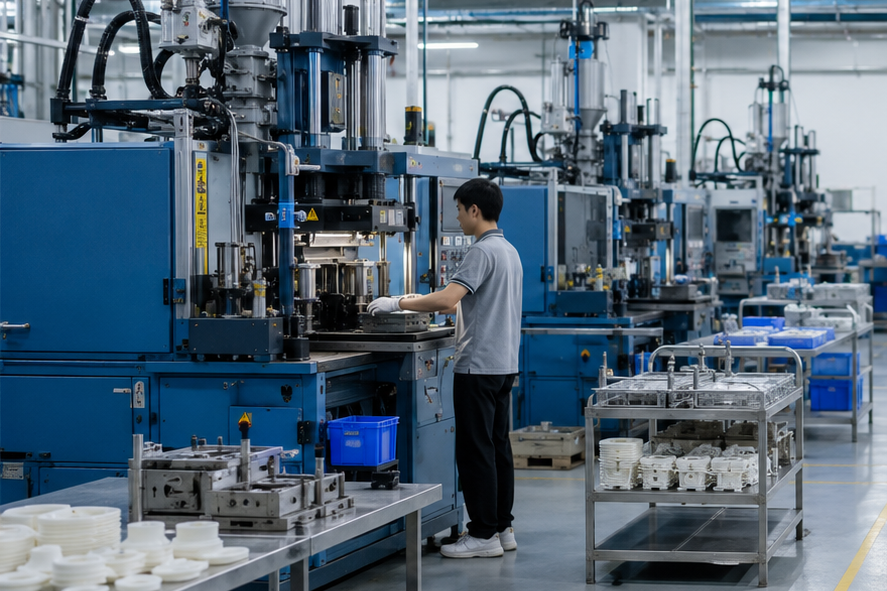
Geometry, material behavior, expected volume, surface needs, tolerances to be confirmed, inspection scope, and secondary operations should be considered together before a process is selected.

Process directions
Compression molding can support a wide range of elastomer parts when compound choice, cavity design, venting, cure behavior, finishing, and inspection are planned around the component.
LSR may be considered where liquid material handling, injection setup, cavity filling behavior, and integrated process steps are confirmed during project review.
Silicone extrusion can support tubing, seals, cords, and custom profiles when section geometry, material response, cut length, joining, and downstream inspection are agreed.
Parting, draft, venting, gating, cavity strategy, finish, and maintenance context are reviewed with the chosen process before tooling scope is confirmed.
Trimming, surface treatment, marking, bonding, overmolding, assembly, inspection, and packaging can be coordinated when each operation is defined in the project route.
Manufacturing handoff
The selected route becomes useful when material preparation, setup, production, secondary work, inspection, documentation, and packaging follow the same confirmed requirements.

Related capabilities
Project inquiry
Share geometry, use conditions, material expectations, quantity, and finishing needs for a process-focused review.